
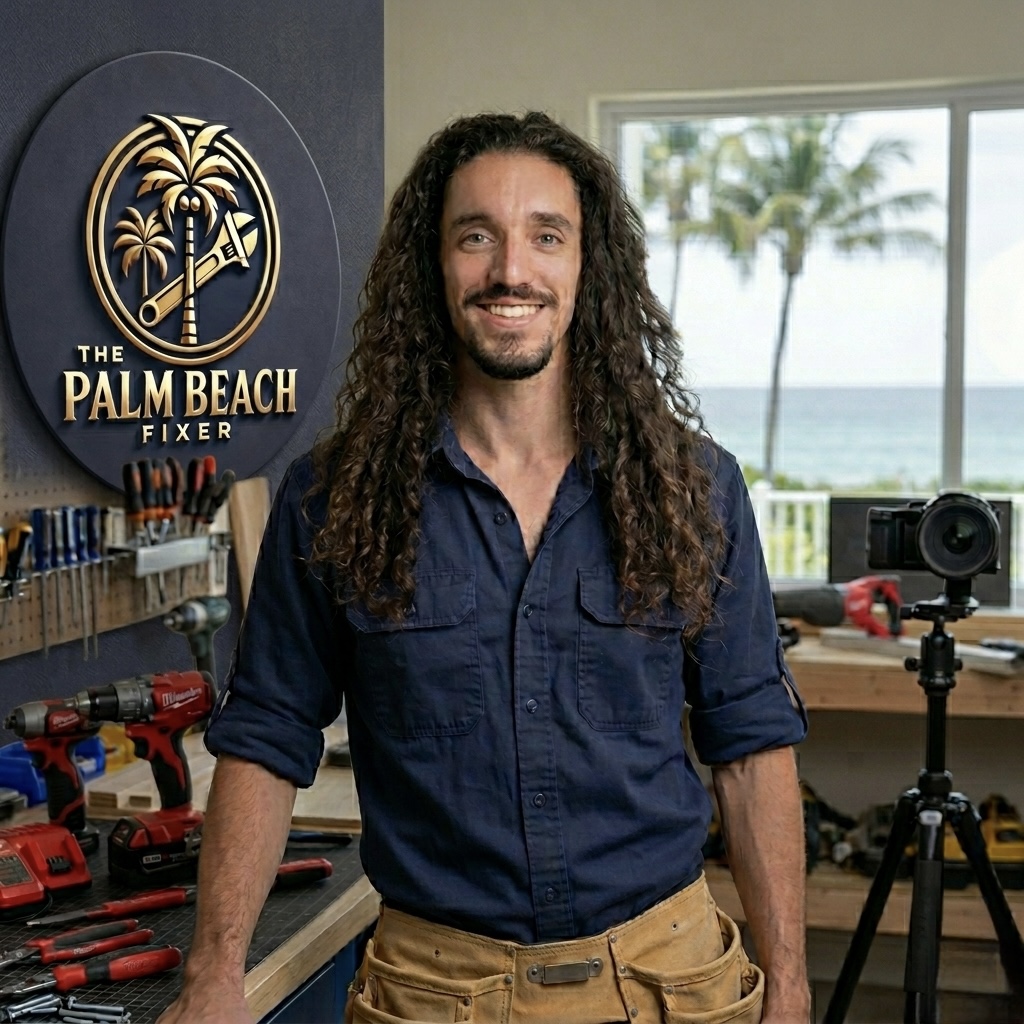
People ask me all the time how I got into this. They see a handyman and assume I picked up a tool belt as a kid, or that I inherited a contracting business. The real story is less neat and a lot more interesting.
Everything I know, I learned the hard way — through years of professional apprenticeships under tradesmen who'd been doing this work for decades. Three separate apprenticeships, three different disciplines, and every one of them built a piece of what I do today.
COVID Shut Everything Down. I Built Something New.
When the quarantine hit in 2020, my business and my other forms of income came to a complete halt. Just stopped. And I had a choice — wait it out and hope things came back, or do something with the time.
I chose the trades.
I started apprenticing professionally under M.A.K. Handyman on Demand — an experienced electrician who deals mainly in residential homes. This wasn't watching YouTube videos or doing odd jobs for friends. This was a full, deep, detailed multi-year apprenticeship. Day after day, hands-on, in people's homes, learning from a guy who'd been doing it for years and doing it right.
Under M.A.K., I learned the residential side of electrical work — how to swap fixtures, install ceiling fans, troubleshoot circuits, upgrade outlets, and understand when something needs a licensed electrician instead. But more than that, I learned how to work in someone's home. How to treat their space with respect. How to communicate what's happening and why. How to quote honestly. How to show up on time and clean up when you're done.
"The client is trusting you inside their home. That's not a small thing. Act like it matters, because it does."
That lesson stuck harder than any wiring diagram.
Painting, Carpentry, and the Precision Side
From M.A.K., I moved into painting and carpentry. I picked up a carpentry apprenticeship that taught me the precision side of the trades — trim work, custom builds, finishing, detail work. The kind of craftsmanship that separates a guy who can fix things from a guy who can make things look like they were always meant to be there.
Carpentry is where you learn patience. Electrical can be systematic — follow the diagram, test the circuit, you're good. Carpentry demands that you see the finished product before you make the first cut. Measure twice isn't a cliche when you're cutting trim for a client's living room.
Painting taught me the eye. Color matching, edge work, prep that makes the paint job last instead of peeling in six months. The prep work nobody sees is what makes the finish everyone notices.
Recruited into Elevator Technology
Then something unexpected happened. I got recruited by Teagle Elevator to become an elevator technician.
If you've never thought about what goes into an elevator, I don't blame you. Nobody thinks about elevators until they break. But inside those shafts, there's a world of work that touches just about every trade in existence.
For a year and a half under that apprenticeship, I was working with:
- Metal fabrication — structural steel, brackets, rails, welding
- Electronics and circuit boards — the control systems that run modern elevators
- Wiring — complex electrical runs spanning multiple floors
- Flooring — elevator cab flooring that has to be perfect and level
- Woodwork and carpentry — the trim and finish work inside the elevator cab
- Mechanical systems — hydraulics, pulleys, motors, counterweights
- Technical diagnostics — reading schematics, troubleshooting systems that can't fail
Elevators gave me something no other trade could: zero tolerance for error. When you're working on a machine that carries people between floors, there's no "close enough." There's no "it'll hold." Either it's right or people get hurt. That standard doesn't leave you when you clock out.
I am the definition of safe and reliable because I was a trained elevator technician. When you've been conditioned to work at that level of precision, hanging a ceiling fan or installing a faucet isn't just easy — it's meticulous. The habits are permanent.
Three Apprenticeships Became One Business
I combined all of it. The residential electrical expertise from M.A.K. The painting and carpentry precision. The mechanical, technical, and diagnostic skills from elevator work. Three separate apprenticeships under experienced tradesmen, building a foundation deep enough to handle just about anything you'd find in a home.
That's how The Palm Beach Fixer started — not with a business plan, but with years of real training that gave me the ability to do a little bit of everything and do it very proficiently.
Who I Work With Now
Today, my work spans three worlds:
Luxury residential is where I spend most of my time. I work primarily with people moving into large, beautiful homes — assembling furniture, hanging expensive art, setting up whole-house systems. I've worked in Boca Raton penthouses, oceanfront condominiums, and prestigious gated communities across Palm Beach County. These are spaces where precision isn't optional.
Corporate and commercial work comes through property management and maintenance companies that service stores you know — Sprouts, Tumi luggage, Dollar Tree. These corporate giants trust me to come in and take care of their work because the standard is non-negotiable.
Airbnb and property management companies bring me in for full property buildouts. Smart locks, cameras, furniture assembly, fixture upgrades — everything a rental needs to be guest-ready and generating revenue.
Whether it's a penthouse or a Dollar Tree, the standard is the same. That's what three apprenticeships and an elevator shaft will do for you.